
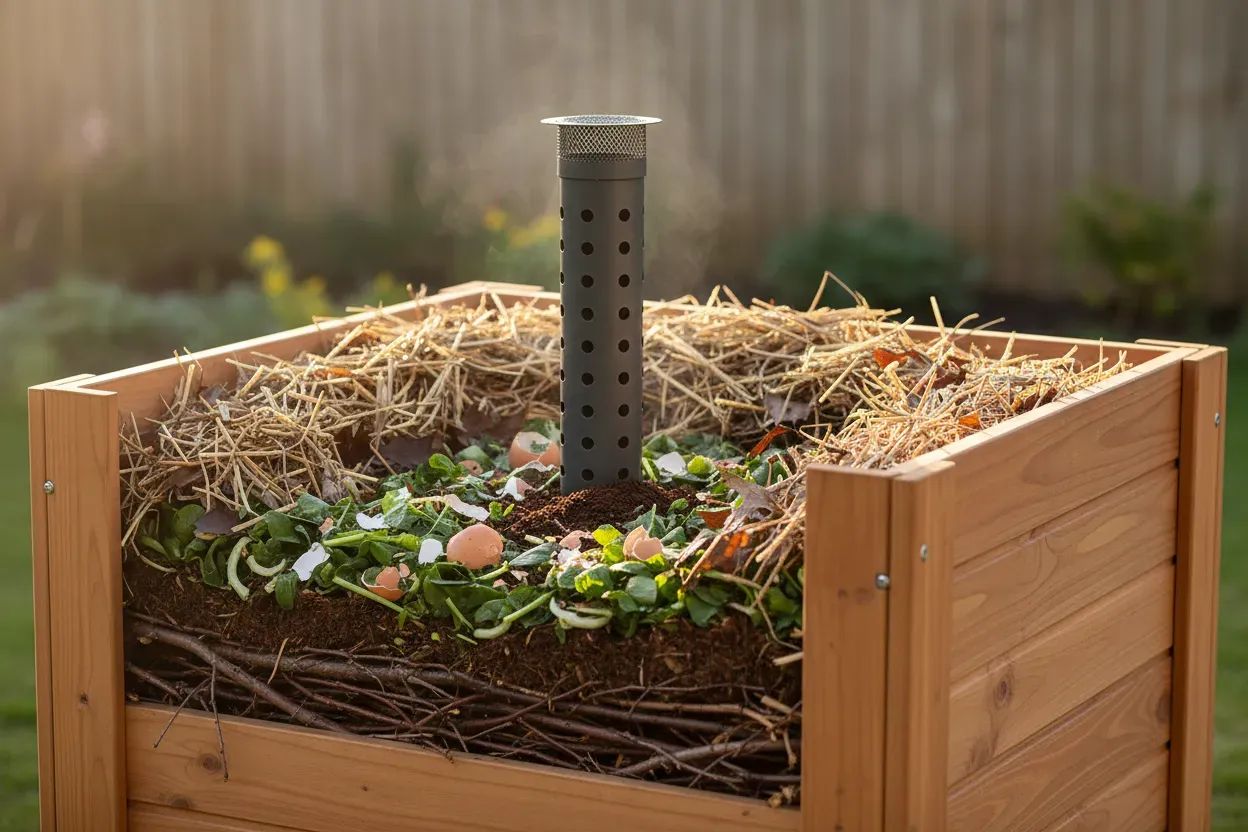
A compost pile that stops breaking down is frustrating, but the problem is usually straightforward to fix. Garden professionals reveal the most effective methods to revive underperforming compost, starting with simple diagnostics anyone can do. Learn the proven techniques that transform struggling piles into productive decomposition systems.

1 gardener in this bed
Use the Sponge Test and Turn
Taylor OlberdingFounder/Co-Owner · Heroes Lawn CareWhen a compost pile starts to smell, we just need to look at some obvious signs, but most of the time, it's just about air and moisture.
If you're getting a sour or rotten smell, that's a sign the pile isn't getting enough oxygen. Give it a really good turn to loosen everything and let air back in. That alone fixes a lot of issues.
If it feels wet or kind of slimy, then we're dealing with too much moisture. In that case, mix in some dry materials like leaves or shredded cardboard . That soaks up the extra moisture and improves airflow at the same time.
If it's dry and nothing's really happening, it just needs a bit of moisture and some fresh greens to get things moving. Don't forget turning it while adding the fresh greens.
An easy way to check is the "wrung-out sponge" test. Grab a handful, then if water's dripping out, it's too wet. If it falls apart and feels dusty, it's too dry. You're aiming for a slightly damp texture.
Make the adjustments while you're turning the pile, not as a separate step. That way, you're fixing airflow and moisture at the same time.
Once you get used to those simple checks, bringing a struggling pile back on track becomes easier.
Taylor Olberding, co-owner of Heroes Lawn Care in Omaha [https://www.heroeslawncare.com], is a qualified professional lawn and landscaping expert with a Bachelor of Science in Turf and Landscape Management, and overall loves gardening.
LinkedIn: https://www.linkedin.com/in/taylor-olberding-7a109692
Build a One-Cubic-Yard Heap
Compost heats best when the pile has enough mass, and one cubic yard is a proven target. This volume traps heat so microbes can work day and night. Smaller piles cool fast and stall, while a larger cube holds steady warmth.
Pack this size with a good mix of greens and browns and leave some rough bits for air pockets. Turn when the core cools to feed it new oxygen. Build up to a one cubic yard pile and start the heat cycle now.
Shred Inputs to Walnut Size
Small, even pieces break down faster because they give microbes more surface to eat. Long stems and whole leaves can mat or shield dry pockets that slow decay. Shred kitchen scraps, chip twigs, and crumple leaves so they blend well with the pile.
Aim for pieces about the size of a walnut or smaller for steady heat and air flow. Keep blades clean to avoid spreading plant disease. Start shredding materials before they hit the bin today.
Seed Microbes From Finished Compost or Tea
Adding a scoop of mature compost or a splash of compost tea seeds the pile with a diverse microbe crew. These helpers wake up fast and outcompete the organisms that cause rot smells. Fungal threads from finished compost also help link bits together and move water.
A light sprinkle on each new layer spreads the inoculant through the pile. This step often shortens the time to a hot phase and a sweet, earthy scent. Inoculate the next build and kickstart the biology now.
Pre-Ferment Scraps Via Bokashi
Pre-fermenting food scraps in a bokashi bucket keeps odors low and deters pests before the scraps reach the pile. The bran microbes acidify the mix, which preserves nitrogen and turns tough bits soft. Once buried in the compost, these pickled scraps finish fast and warm the core.
This method also handles small amounts of meat and dairy that would otherwise attract animals. Drain excess liquid so the bucket stays active and clean. Set up a bokashi bucket and prime the pile this week.
Cover the Pile Under Tarp
A simple tarp can save a lagging pile by keeping out heavy rain that drowns microbes. When a pile gets waterlogged, air is pushed out and the process turns cold and smelly. A cover also holds heat, reduces nitrogen loss, and stops nutrients from washing away.
Secure the edges so wind does not peel it back. Check moisture with the squeeze test and add water under the tarp only when the mix feels like a wrung-out sponge. Cover the pile today and protect the work inside.