
Lawn weeds don't stand a chance against strategic mowing and maintenance practices. This guide covers proven methods to suppress unwanted plants through proper grass height, seeding, and aeration, with insights from lawn care experts. These chemical-free approaches work by creating conditions where your grass thrives while weeds struggle to take hold.


2 gardeners in this bed
Let Taller Grass Lead Then Seed Aerate
Angelika ZaberLawn Care Specialist & Gardening Expert · Online TurfIf a lawn is dotted with weeds and you want to avoid herbicides, here's how you can prioritise your mowing height, overseeding, and soil improvement for best results:
Mowing Height
If you want your grass to be strong and healthy, so that it can outcompete weeds easily, prioritise mowing it at the correct height throughout the growing season.
To do this, always follow the one-third rule. In simple words, never take more than one third of your grass length in one go. Cutting it down further can scalp the lawn and stress the turf. Instead of focusing on healthy growth, it must use its energy to repair the damage, meaning it takes longer to recover from the mow and its overall resilience drops. This makes it more susceptible to pests, diseases, and of course, weeds.
If this leaves your grass quite long and you would prefer a shorter length, use a 'staircase technique'. This involves lowering the mowing height gradually with each mow, just like walking down a staircase, rather than doing so all at once.
Overseeding
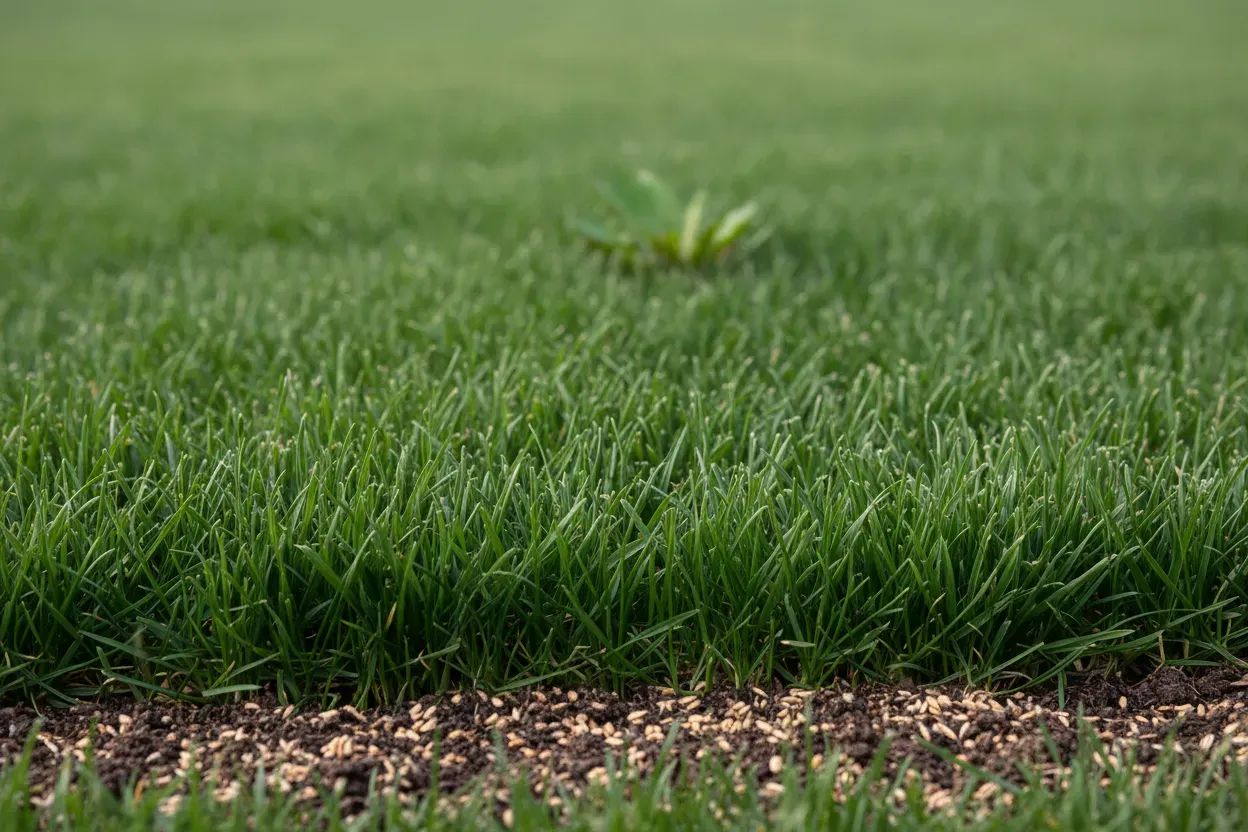
Prioritising overseeding your lawn throughout the season helps to create that thick, dense, healthy turf that crowds out weeds by leaving them no space, sunlight, or nutrients to establish.
To do this, aim to spread around 25 grams per square metre during either spring or autumn. During these times of the year, grass has the highest germination rates as the soil tends to be moist and temperatures are mild. However, you can still overseed your lawn during summer, just make sure to stay on top of watering the seeds and do not let them dry out.
Soil Improvement
Keeping your soil healthy throughout the growing season is extremely important if you want a weed-free lawn, and it is something that has personally made a lot of difference to my garden.
Healthy soil will allow your turf to get the water and nutrients that it needs more easily, since it will not be compacted, while allowing your lawn to develop deeper roots. This will positively impact your lawn's health and allow it to handle tough conditions, such as drought, better, without allowing weeds to take hold in that moment of weakness.
To achieve this, aerate your soil once or twice a year during spring or autumn, to break up any compacted soil, and top-dress it to improve its structure and drainage.
Raise The Blade And Shade Out Intruders
Angelene PadillaLead SEO and Social Media Manager · Bloomfield Flower MartThe priority is to maintain 3.5 to 4 inches of grass all season which is better done with a high cut. Tall grass covers the soil and prevents weed seeds from receiving the light that they require for germination. Stressed turf is quickened for common weeds such as crabgrass and dandelion to gain access, maintaining a dense canopy prevents them from getting in before they root. Scaling in early spring will clear the soil and give weeds a head start.
The best time is in early fall when soil is still warm, weed growth is reduced and new grass has sufficient time to establish prior to frost. The soil is first broken down by core aeration and the seed comes in contact with the soil directly rather than on top of thatch. High seeding rates are used in the thin and bare areas because weeds tend to concentrate in these areas and expand from there.
A thin layer of compost after aeration will feed soil biology and change soil conditions from weeds to grass. A slow release nitrogenous fertilizer in fall combined with overseeding will promote root development over the winter and provide grass a head start in density in the spring. The one change that worked best in reducing weeds was permanently increasing the mowing height. Weeds do not have room, light or bare earth to work.
Water Deep And Early For Resilient Growth
Deep, infrequent watering trains grass to send roots down where soil stays cool and moist. When roots grow deeper, the surface dries faster, which makes it harder for weed seeds to sprout. A single soaking that delivers about an inch of water once or twice a week beats daily sprinkles that only wet the top layer.
Early morning watering reduces waste from heat and wind and lowers disease risk. A simple can or rain gauge can confirm the right amount, and a screwdriver test can show how far moisture reached. Set a schedule for deep soaks and start measuring how much water reaches the soil this week.
Pull After Rain And Remove Roots Completely
Hand-pulling works best right after rain because soft soil lets taproots slide out whole. Removing the entire root denies weeds the chance to regrow and clears space for grass. A narrow weeding tool or a kitchen fork helps loosen the crown without tearing the turf.
Collected weeds should be bagged and binned, especially if they hold flowers or seed heads. Any gaps left behind can be filled with a pinch of compost and fresh seed to prevent new invaders. Plan a short weeding session after the next rainfall and pull each plant roots and all.
Dethatch To Expose Soil And Thicken Lawn
Thatch is a tight mat of dead stems that can shelter weed seeds and slow water into the soil. Dethatching breaks that cover, exposes tender seedlings, and gives air and moisture back to the grass roots. Use a stiff rake or a dethatching tool during active growth in spring or early fall so the lawn can rebound fast.
Rake up and remove the loosened debris so light reaches the soil again. Afterward, overseed thin areas to thicken the turf and crowd out weeds. Choose a mild day to dethatch and follow it with overseeding and a light watering routine.
Install A Clean Edge To Block Spread
Many spreading weeds move on underground stems, so a clean border stops them before they enter the lawn. A sharp spade can cut a neat trench edge, or a rigid barrier can be set a few inches deep to block runners. Keeping the top edge slightly above the soil helps stop stolons and rhizomes that try to creep over.
A defined edge also guides mower wheels for a crisp cut that does not drag weeds inward. A quick monthly walk of the borders lets any escape points be clipped early. Mark your borders now and install or refresh an edge that keeps creeping weeds out.
Add Paths And Protect High Use Areas
Heavy foot traffic squeezes air from soil, and compacted spots thin out and invite weeds. Bare patches warm fast and give light to invaders like plantain and goosegrass. Directing movement onto paths or stepping stones protects the yard and keeps pressure off tender turf.
High-use zones can be aerated to open the soil and followed with compost and seed to rebuild cover. Training pets and setting play zones also cuts random wear that leads to weak grass. Pick a route for regular use, set down a simple path, and protect the rest of the lawn from trampling.